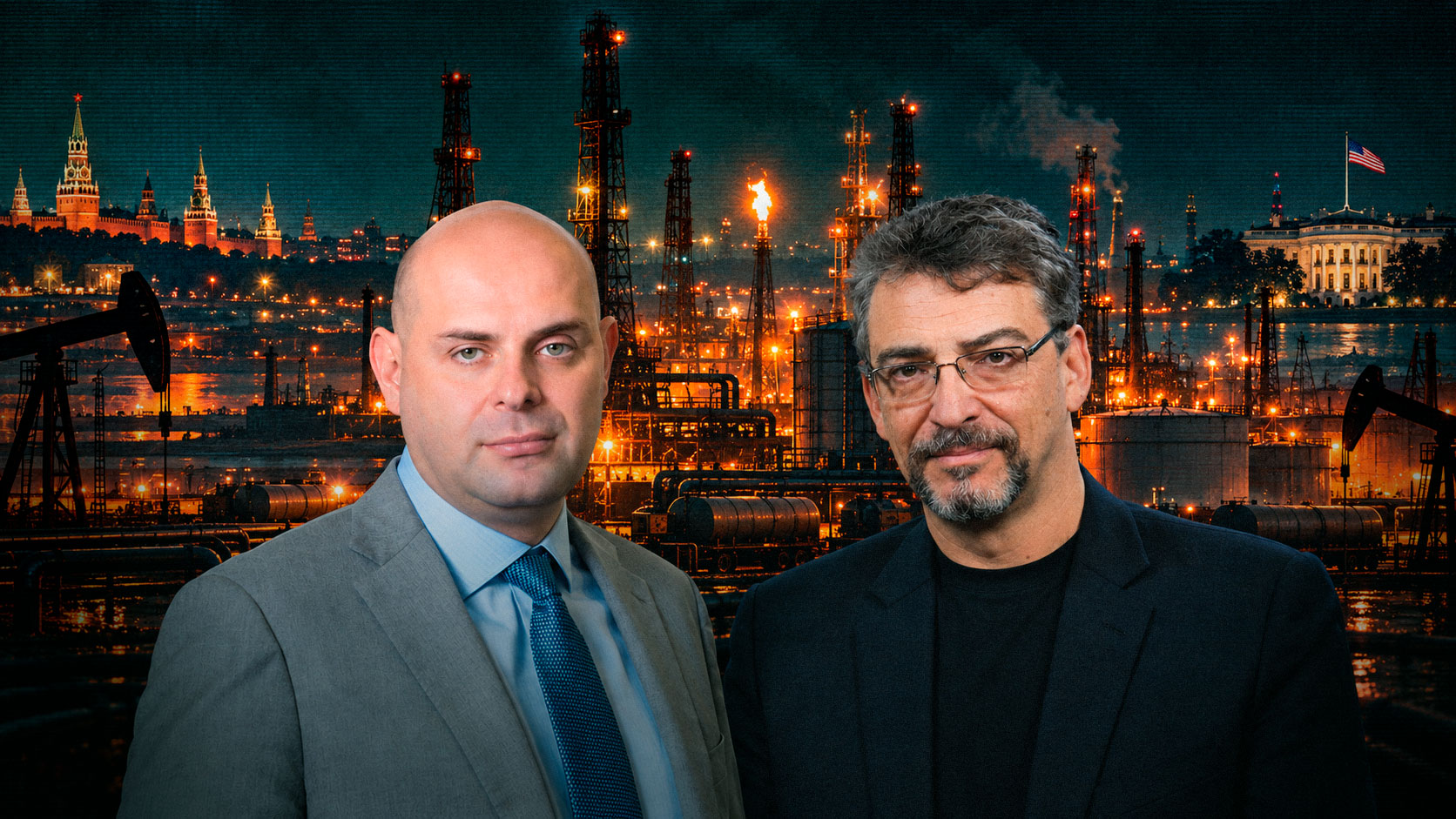
Fadi Khraibe and Ariel Cohen
Evgenia Albats: On October 18, a month after President Trump signed the law named after the late Senator Lindsey Graham on massive secondary sanctions against buyers of Russian oil, countries that are among the top five buyers of Russian crude oil and natural gas should be named. Do you think sanctions will follow against China, which consumes 50% of Russian oil exports, and against India (36–37%), or is it again the usual blah-blah coming from the White House?
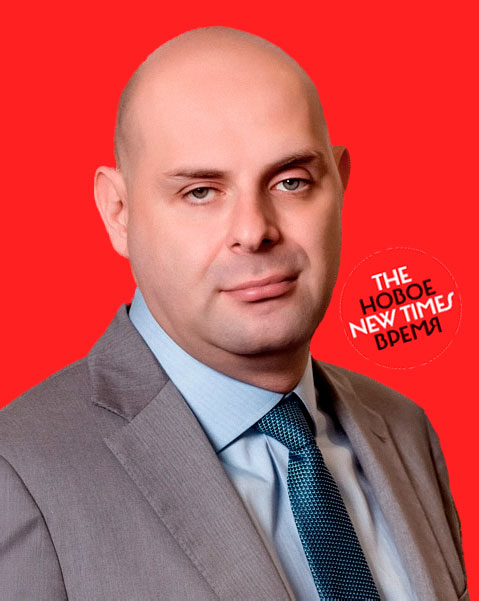 Fadi Khraibe: The Lindsey Graham law is a very important step forward. It gives the US administration and specifically President Trump a tool they can use if they want. Or, if they don't want, they can choose not to use it, or they can use it selectively. Today, the US has many problematic issues with China—in the field of trade, artificial intelligence, and geopolitics (Taiwan and Southeast Asia). Therefore, I doubt Trump will want to add additional contradictions to this list. That's on one hand. On the other hand, we see the situation at gas stations in the US today, the situation with diesel, and how Democrats are actively using this against Republicans. Undoubtedly, imposing sanctions on consumers of Russian oil will lead to higher prices for oil and oil products, which Trump does not want today. Therefore, I very much doubt that we will see this law in action in the near future.
Evgenia Albats: Then why are they called "hellish sanctions"?
Trump's whole approach is to maintain a diplomatic channel with Putin. Sending his relatives and business partners to Putin to tell him how good he is, hoping that this will somehow pull Russia away from China
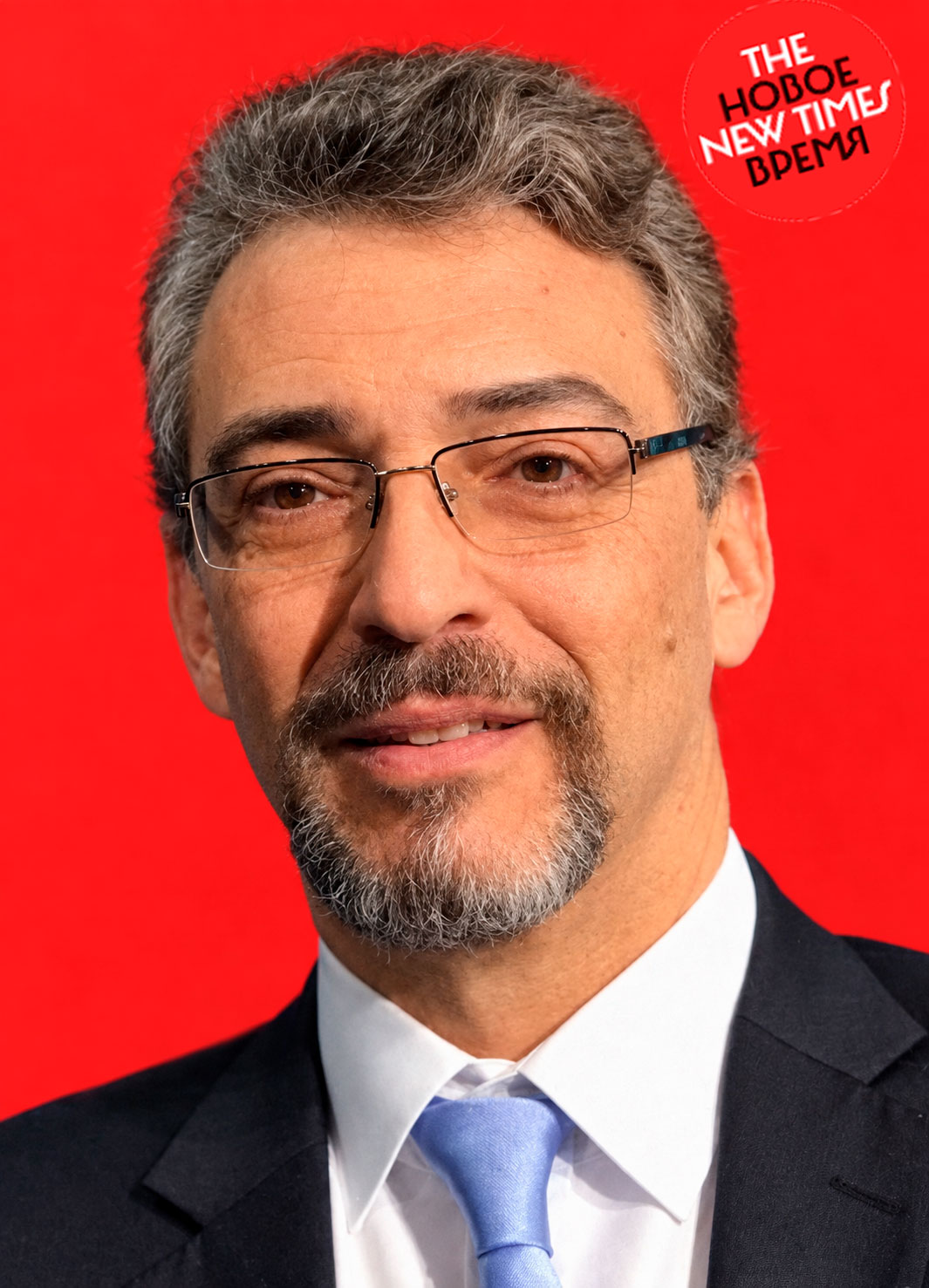 Ariel Cohen: The late Lindsey Graham had one position on Ukraine, the Middle East, foreign policy, which can be described as neoconservative. This position is close to me, but I am not a neoconservative, I am a realist. And as a realist, I tell you that the chances that Trump will now take this sanctions club, which Congress gave him, and hit Putin with it, are about twenty percent. I'm still an optimist because, as my colleague Fadi correctly noted, Trump has midterm elections on his nose, in which Republicans are predicted not only to lose the House of Representatives, which is normal in midterm elections (if the president is a Republican, Democrats usually take the House of Representatives in midterm elections), but the Senate is also in big question. And if he loses both, impeachment is guaranteed. True, 60 votes are unlikely in the Senate, so he won't actually be thrown out of the White House, but there will be impeachment, if I haven't lost count, for the third, if not the fourth time.
But Trump is also a realist, he understands that he needs lower fuel prices, especially diesel, which is needed for agriculture, used for transporting products, for all machines, combines, tractors, and so on. And diesel is now about $6 per gallon (3.79 liters), which is expensive by today's standards. By the way, for our European and Israeli friends, this is still cheap. But that's not the point. The point is that Trump's whole approach is to maintain a diplomatic channel with Putin. Sending his relatives and business partners to Putin to tell him how good he is, hoping that this will somehow pull Russia away from China, whose raw material appendage it has become. Trump hopes he can maintain some balance, and Russia won't fall into China's black gravitational field (it has already fallen there, in my opinion), and for this, he maintains a channel with Putin and doesn't want to hit him with this big sledgehammer of these terrible sanctions.
Red carpet for Xi
Evgenia Albats: Ariel, you're in Washington, tell me, what is heard about the three-day meeting between Chairman Xi and President Trump? A meeting with a red carpet, artillery salute, a curtsy that Trump performed in front of Xi's wife, just didn't kiss Xi Jinping's hand. Did Trump succeed in these negotiations, or did they end in nothing again?
Ariel Cohen: What does it mean to succeed and what does it mean to end in nothing? It depends on the point of view.
Evgenia Albats: For example, from the point of view of China buying 50% of oil from Russia, which allows Putin to earn money that Russia uses to kill Ukrainians.
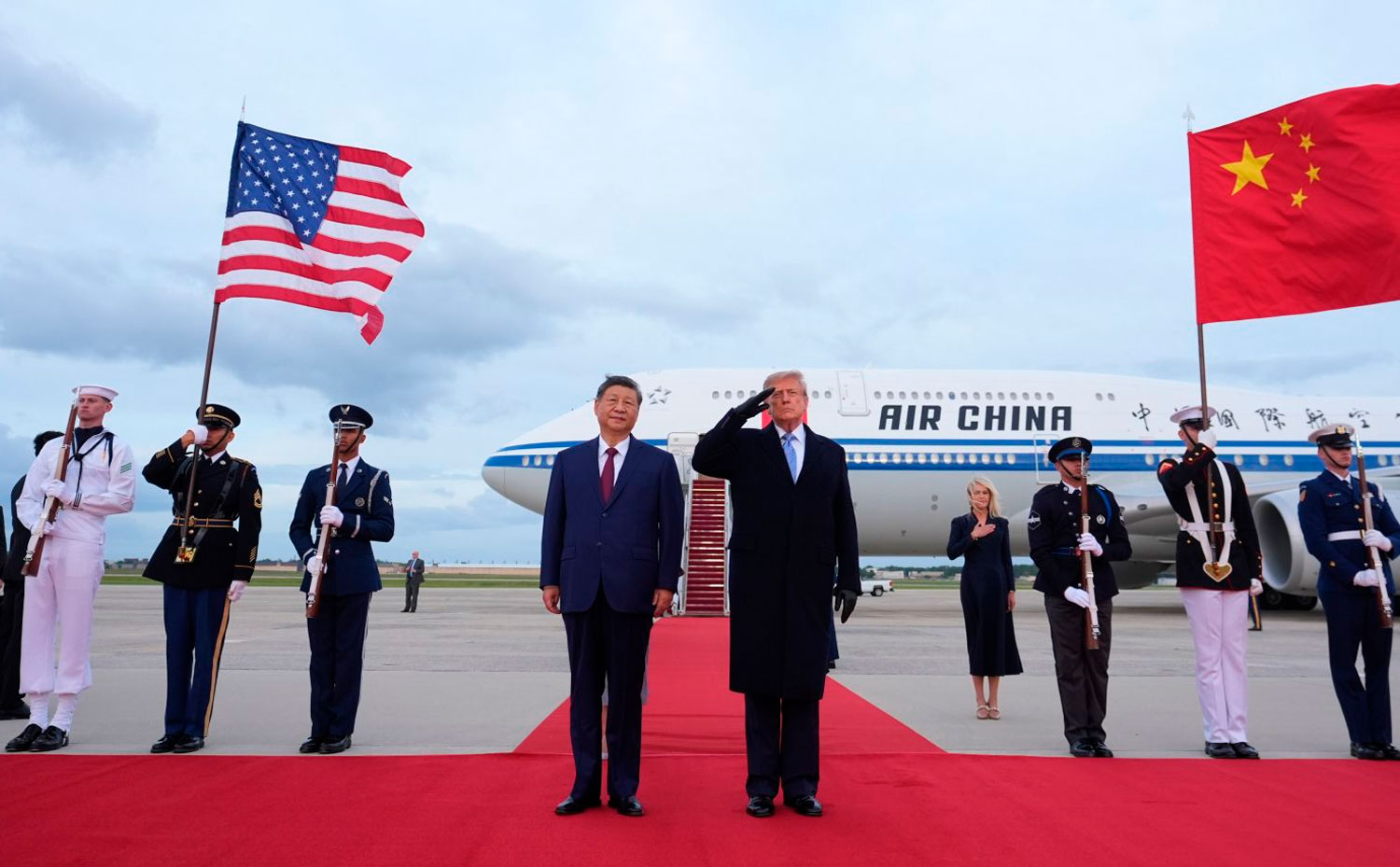
Chinese leader Xi Jinping arrived in the US on September 23 for a state visit. The Chairman of the PRC was personally met by US President Donald Trump. Photo: Alex Brandon / AP / Scanpix / LETA
Ariel Cohen: Chairman Xi speaks differently. He says: "Russia is our junior partner, we must let Russia earn some money". Moreover, China wins in any case. If Russia strengthens by defeating Ukraine, it will weaken Europe (I believe that Russia has already lost this war unless Europe completely collapses and falls apart as a military-economic bloc). Or Russia loses, becomes very weak, and completely dependent on China—and gradually China starts to take over all economic assets even faster than now in the Far East and Siberia, becoming the hegemon of the entire Asian part of Russia. In China, they have not forgotten the "unequal," as they say, agreements of the 17th century, under which the Far East and part of Eastern Siberia were taken by the Russian Empire from a weakened China. No one has forgotten these claims.
Evgenia Albats: Fadi, what do you say?
Fadi Khraibe: I think that the issue of buying Russian oil was either not on the list of issues discussed in Washington these three days, or if it was, it was a secondary issue because today Trump's priority is the financial support that China provides to Iran through the purchase of Iranian oil.
Evgenia Albats: Why does China need so much oil?
Fadi Khraibe: This is the fastest-growing economy in the world, which does not have its own energy resources. America today is self-sufficient. But imagine the huge economy of America without oil, as it was 25 years ago.
Ariel Cohen: Before shale oil, about which Sechin and others said it was a bluff by the American oil industry, that there was no shale oil, no liquefied gas, no electric cars. In general, Russia showed the depth of its analysis here.
Fadi Khraibe: Accordingly, America was the largest consumer of oil in the world. Most of the oil came from the Middle East, some from Venezuela. After the "shale revolution," the US has reduced its attention to these regions. And as a result, we got Hugo Chavez in Venezuela, Iran gained strength in the Middle East. Russia appeared in Syria, which I think was simply unrealistic until 2000. So, accordingly, China is in the same situation because they don't have their own oil, they have a large economy, they need to grow. Any economy is energy-intensive. Therefore, they need oil.
Ariel Cohen: I will add that I recently reviewed the growth of the Chinese energy economy since 2021. Fadi is right, oil consumption is growing, but it is growing by about 5% from the twenty-first year to today. Since the number of electric vehicles in China is growing very quickly, they burn less gasoline. Gas is growing by 10–15%. And solar energy has grown by 250+ percent over 5 years. That is, they are betting on renewable energy sources. Especially on solar. They are monopolists in the production of solar panels, but they also introduce more nuclear reactors per year than in the rest of the world, if I'm not mistaken. That is, colossal growth. And Trump cannot dismiss the Chinese economy or personally Chairman Xi.
In the US Congress, there is some frustration that they can't do anything. They really want to help Ukraine, try to force Putin to change his policy, stop the war. Well, they pass laws
Evgenia Albats: Then why was the Lindsey Graham law passed? Fadi, you practically quoted the US State Department's statement from September 25, 2026, which said that this law is currently considered more as "one of the tools in the arsenal, rather than a means of immediate economic impact". Then what's the point?
Ariel Cohen: In the US Congress, in the Senate and the House of Representatives, there is some frustration that they can't do anything. They really want to help Ukraine, try to force Putin to change his policy in Ukraine, stop the war. Well, they pass laws. Trump resisted for several months until they gave him the ability to impose or not impose these sanctions at his discretion.
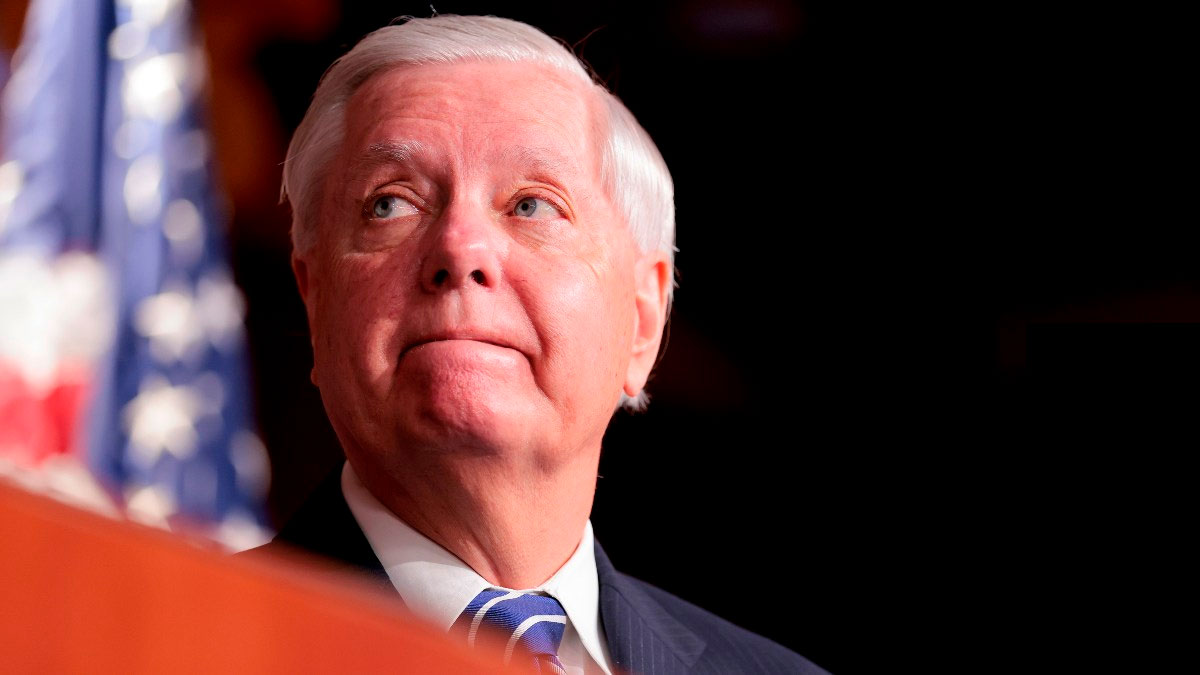
Lindsey Graham. Photo: Heather Diehl / Getty Images
Evgenia Albats: This is the second, by the way, unclear thing in this law.
Ariel Cohen: From the point of view of the US Constitution, foreign policy is practically the exclusive competence of the president. As for the financing of policy—that's
Congress. Policy execution—that's the president. Therefore, the president insists: I must have the right not to apply these sanctions. This is my tool, you give it to me, but I will decide how to apply it.
Fadi Khraibe: There is another aspect of why this law was passed. Because, if you remember, after taking office, Trump imposed very high tariffs on almost all imports to the US. This year, in 2026, the Supreme Court overturned these tariffs. And then the administration tried to come up with a solution on how they can continue to raise tariffs. But if the average tariff that Trump imposed in 2025 was around 18%, today through new mechanisms they managed to add about 6–7%. The law that was passed allows the president to impose very high tariffs, up to 500%, on countries that buy Russian oil. I don't think China or India is under threat. There are many different smaller countries that buy Russian oil and are quite significant exporters to the US. For example, Vietnam and other Southeast Asian countries. In Vietnam, there is even a joint venture with Russian oil companies. After the elections, sanctions can be imposed on them, thereby returning to the policy of imposing tariffs for the American market, which Trump and some people in his administration are trying to promote.
Thus spoke Trump
Evgenia Albats: Do I understand correctly that the imposition of these very "hellish" sanctions is so painful for the United States itself that they will never be imposed?
Fadi Khraibe: They are painful if applied to China.
Evgenia Albats: And to India, which buys 36–37% of Russian oil?
Fadi Khraibe: The trade turnover between the US and India is not that large, so I don't think it will play any role. I think he won't touch China, but he will apply the law selectively to other countries, more likely to use it as a tool in trade negotiations and imposing additional tariffs on certain countries.
Evgenia Albats: But Trump promised his voters that he would end the war in Ukraine in 24 hours. Isn't it painful for him that he told everyone how he would stop everything now, pressured Zelensky, and the result is zero, just zero.
Trump has great respect for Putin. It's not that Trump doesn't want to end the war. Trump wants to end the war, it's Putin who doesn't want to. Putin doesn't care about Russians, Trump has more sympathy for Russians than Putin
Ariel Cohen: Yes, it was terrible when they tried to make Zelensky a punching bag. But it didn't work out, now there's a completely different tone with Zelensky, they respect that he stood his ground. That's the first point. The second point: Trump didn't say he would order Putin. Trump has great respect for Putin. It's not that Trump doesn't want to end the war. Trump wants to end the war, it's Putin who doesn't want to. Putin doesn't care about Russians, Trump has more sympathy for Russians than Putin, in my opinion. Regarding what he said... Trump says a lot of things. For example, that he will wipe Iran off the face of the earth. And I hear from the White House, from Trump's entourage, that on the contrary, Trump really wants an agreement. The Americans have exhausted their entire stockpile of ammunition in Iran. God forbid something starts in Europe, or a mess with Taiwan, and there aren't enough "Tomahawks." That is, Trump has completely different calculations than bombing Iran for who knows how long.
As for Ukraine, we and our colleagues at the Atlantic Council are preparing a big report where we calculated how much money Russia spent on each hectare captured in Ukraine.
If compared to the land market, it spent 20 times more than the Ukrainian price for land, and 10 times more than the Russian one. That is, it's absolute nonsense—what Russia is doing in Ukraine from an economic point of view. How long will this continue? Well, your guess is as good as mine or Trump's.
As for the midterm elections, which we are talking about, they are only about the wallet, as is traditionally the case in America: about income, expenses, gas prices, diesel prices, and also about whether Americans need a war in Iran. Democrats made the war in Iran the second most important issue of these elections. At the same time, people don't understand that Iran is a threat not only to the Middle East, not only to the Emirates, not only to Saudi Arabia and Qatar, which they bombed oil and gas facilities. Qatar is not exporting gas to Europe at all now. Europe may not freeze in winter, but it will be very cold because there is no Qatari gas. They bombed Kuwait, bombed the Emirates, they also fired a lot at Israel. Iran is also a threat to Europe and America because today putting a large third stage on a ballistic missile with two stages, and it already reaches New York with a nuclear bomb. So, in my opinion, Republicans missed the opportunity to explain to voters why the war with Iran was needed. And therefore, no one will bother now with what Trump said two years ago about how he will quickly end the war in Ukraine. Well, maybe except for the Ukrainian diaspora, which is already against Trump.
Evgenia Albats: Fadi, you are a person from the Middle East, this is not foreign land for you. How much do you perceive Iran as a threat?
Fadi Khraibe: Iran definitely has a goal to be dominant in the Middle East, a regional hegemon, as some experts call it. We understand that Iran is not a monolithic country, but today the most radical wing of the political elite is in power. There is a question that people ask: is it possible to negotiate with Iran? I'm not sure that this wing is interested in stopping the war at all because, despite all the economic sanctions, despite the fact that inflation there is already reaching hundreds of percent, they are probably in the most advantageous geopolitical situation since the creation of the Islamic Republic of Iran.
Evgenia Albats: Why?
Fadi Khraibe: They control the Strait of Hormuz. They have shown all their neighbors—Saudi Arabia, Qatar, the Emirates, Kuwait—that America will not protect them. They have set part of the American elites on the idea that America needs to leave the Middle East altogether. Therefore, I think they believe they are on top now. Yes, they have big losses along the way, but in terms of geopolitical position, they feel very good.
And eternal war
Evgenia Albats: The UN General Assembly is taking place in New York, and the President of Iran arrived there, which is surprising in itself, considering the war. And the President of Iran gave a big interview to the program Face the Nation on the CBS channel. I listened to this interview carefully. It seemed to me that the President of Iran sounded offended, but at the same time somehow very conciliatory. And even when asked about so many protesters being killed in Iran, he said that among them were people with weapons, which is why many innocent people died, and so on. That is, in tone, it was more of a conciliatory interview. But do I understand correctly that the President of Iran is actually a person without power, and the decisions are made by the Iranian Revolutionary Guard Corps?
Fadi Khraibe: All strategic decisions are made by the Ayatollah, whom no one has seen and doesn't know where he is, and the Council with him. The President is more of an operational manager. But since the game of good and bad cop is possible, he has been playing the role of a good, conciliatory negotiator for the last 6 months. But the facts show that he is unable to implement anything and the power is not in his hands.
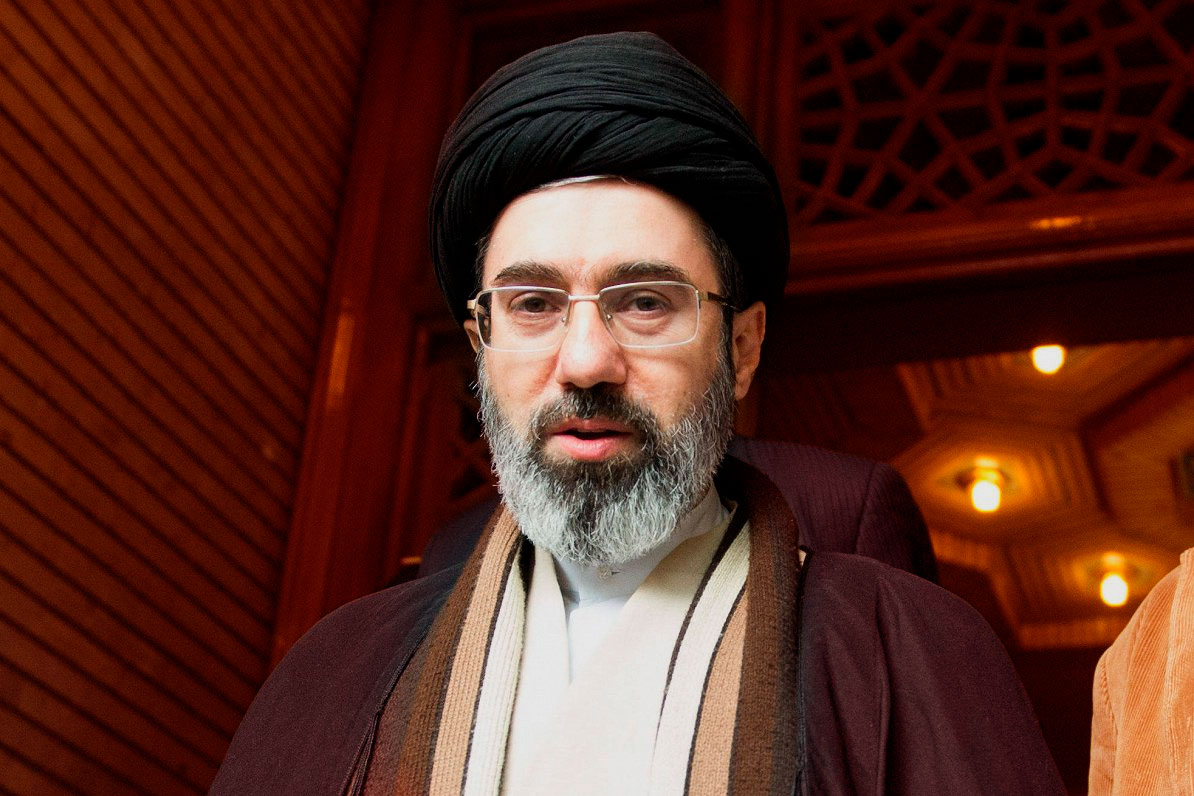
Supreme Leader of Iran Mojtaba Khamenei. Photo: Reza B/MEI/SIPA
Evgenia Albats: In this interview, the President was asked if he had seen the Ayatollah. He said yes, he had seen him. The President of Iran is a medic himself, but he refused to answer medical questions. He said that from his point of view as a medic, he has no questions about the Ayatollah's health. Do you think the Ayatollah is alive at all?
Fadi Khraibe: I don't know. Maybe, as they used to say in the Soviet Union, "without regaining consciousness, he assumed the post of general secretary". But in fact, Iran does not have a one-man rule, as it was in Venezuela. And therefore, probably, the Americans could not achieve in Iran the results they hoped to achieve. And since it is a collegial management, there is some group of people making decisions and hiding behind the Ayatollah, just carrying him as a flag.
The situation with Iran is very bad. Just as Putin needs eternal war to maintain his regime, the IRGC needs it to maintain their regime
Ariel Cohen: Pezeshkian, let me remind you, became president after the previous president died in a helicopter crash. Pezeshkian was not wanted by the previous Ayatollah because he was too liberal. Yes, he always sounds conciliatory. And the real power is with the IRGC. Moreover, the Revolutionary Guard Corps, led by General Vahidi, is not homogeneous. There is an even more extreme faction led by the leader of the Basij militia, which allegedly disrupted the previous agreement by shelling tankers in the summer. The Ayatollah now is a cardboard silhouette carried through the streets. He is physically in poor condition and politically even worse. Therefore, all hope is on General Vahidi. And General Vahidi benefits from the war, as long as it continues, he has absolute powers as the head of the Revolutionary Guard Corps. That is, the situation is actually very bad. And just as Putin needs eternal war to maintain his regime, the IRGC needs it to maintain their regime.
Evgenia Albats: Fadi, do you also think that the war in Iran is for the long haul? Among political science specialists, it is believed that if a war does not end in two weeks, it can last for many years. Wars are very difficult to end. And does this mean that the problem with the Strait of Hormuz will continue? And the problem with the Houthis and their control over the Bab-el-Mandeb Strait, through which Saudi oil passes?
Fadi Khraibe: Well, the war is de facto suspended, they are not shooting much now. I talked to my friends who are in Qatar, one of the most affected because 90% of Qatar's gas production facilities were destroyed. Now everything is fine, they are not shooting, planes are flying to Europe, to America, everything is fine. There are local manifestations of the conflict. The Houthis, the blockade of the Strait of Hormuz, American and Iranian, but both blockades are selective. The volumes of oil passing through the Strait of Hormuz have increased over the past three months. Before the war, they were 20–21 million barrels per day, during the active phase of the war they fell to 1–2 million barrels per day, now they are about 7.5–8 million per day. That is, the players have adapted to the current situation. I understand that many of them pay some tribute to Iran to let their ships pass. The Americans only stop Iranian ships. Therefore, the price of oil fell to 95, even to 92 at some point. Now it has risen to 107 against the background of the Houthis reaching the Bab-el-Mandeb Strait, but this is not a catastrophe because the scenario that was painted at the beginning, that it would be 200 dollars per barrel, did not materialize.
Ariel Cohen: But until the last days, both the United States and China were choosing their strategic reserves. And practically we are already at the bottom of this barrel, we have chosen it, and the Chinese too.
Fadi Khraibe: I would disagree. We don't know what China's reserve is. China chose 500 million barrels from its reserves, but we don't know how much there was. Definitely, they may have the largest oil reserve in the world. But the oil market is a real market, the price reflects reality. If it were impossible to buy oil for 107 dollars today, it wouldn't cost 107 dollars.
Ariel Cohen: I'm saying that it can go up and become 120, 130, 150. This will raise inflation. If I remember correctly, an additional 10 dollars per barrel is 0.1% inflation.
Fadi Khraibe: In different countries, it's different...
Ariel Cohen: In America and Europe, a large part of the oil price is taxes. If they start squeezing these taxes, then, in general, taxis won't stop running, you can refuel your car, but it will be a negative factor in the overall economic balance.
Fadi Khraibe: But look, on the other hand, if there were a consensus or understanding in the oil industry today that the price of oil will remain at the current level or rise, we would see much higher drilling activity in the US. Drilling in the US has increased by 10% since February this year. And after COVID, it has tripled. That is, such opportunities exist. Nothing limits them except the desire to invest money in extracting additional volumes. People are trying to activate frozen wells, trying to extract easily accessible reserves. But no one is ready to go into mega-projects today because the heads of oil companies are not sure that oil will stay at this level for 5–7 years.
Evgenia Albats: And Venezuelan oil doesn't affect it yet?
Fadi Khraibe: It doesn't affect it yet. There is great interest in the Venezuelan industry, planes are packed in the direction of Venezuela with oilmen, everyone is going, looking at projects. Guyana, also an oil-bearing country, is adjacent to Venezuela, and there is also great interest in it now.
Evgenia Albats: But this will not change the price of oil.
Fadi Khraibe: This is a factor that, if it plays a role, will be on the horizon of at least 3 years. A lot needs to be invested there.
Purely politically, expensive oil is beneficial not only to Putin but also to America's democratic socialists, who want to eliminate the entire oil industry
Ariel Cohen: Tens of billions of dollars are needed, the colleague is right. The oil is heavy, it needs to be diluted, special processing capacities are needed. This potential is for 5–7 years ahead, these are huge reserves, and the oil will not run out. But here comes a very interesting point. In Washington, on the left flank of the Democrats, there is a huge lobby for renewable energy sources. And oil in three-digit figures per barrel is godsend for this lobby to push, push, push the oil industry and transition to renewable sources, to electric vehicles. Purely politically, expensive oil is beneficial not only to Putin but also to America's democratic socialists, who want to eliminate the entire oil industry.
Fadi Khraibe: Since the US is the largest oil exporter in the world, globally, from the point of view of US GDP, expensive oil is beneficial. There is also the addition that the second energy source in the US is gas. And gas in America is very cheap.
Therefore, if it weren't for the gas station price and the upcoming elections, I think Trump wouldn't be in such a hurry to lower the oil price or negotiate with Iran.
Evgenia Albats: So, do I understand you correctly that the hope that the war in Ukraine may end when the Russian economy goes bankrupt, and it will go bankrupt, remembering the experience of the Soviet Union when oil prices fall below 30 dollars per barrel, let's say, is a vain hope?
Fadi Khraibe: So far, this is not visible in the foreseeable future. Maybe renewable energy sources will push oil and oil products so much that their price will start to fall—yes, such a scenario may be. China is moving very quickly in this direction. And in the Soviet Union, I think there was an additional factor why everything fell apart. There was the factor of Gorbachev, who came and tried to make some reforms. If instead of Gorbachev there was Andropov, I don't know if the Soviet Union would have collapsed and how it would have ended.
Ariel Cohen: It wouldn't have collapsed. But I want to return to the economic question. The gold and foreign exchange reserves of the Russian Federation, including frozen assets, are more than 700 billion dollars. That's a lot. The Soviet Union, when it collapsed, was bankrupt. And as long as Russia's economic situation allows it to fight, it will fight. As long as the demographic situation allows it to fight, Putin will fight.
They threaten
Evgenia Albats: Today, many Russian media in exile (since there are no media left in Russia) write that the FSB came out with a statement, and in particular, one unnamed FSB officer says the following: "Persons who decided to link their fate with London and wish Russia's defeat are known to counterintelligence by name". And then the following is heard. Quote: "We see their every step, their fates are predetermined, we will not allow Khrushchev's mistakes with the amnesty of Bandera supporters". This is in the conversation about what political immaturity or ambiguity of the West's steps towards Putin and ending the war in Ukraine turns into. I believe that under Biden, monstrous mistakes were made. Frankly, when Trump came, Fadi and I talked, and we thought that if anyone stops the war, it will be Trump. But we see: Democrats, Republicans, businessmen in power—all the same. They don't see beyond their own noses...
Fadi Khraibe—a Lebanese, grew up in the Soviet Union, his father was a Lebanese communist. Heads a large company in Houston (USA), which, in particular, produces pipes in Ukraine necessary for shale oil extraction and imports them from Nikopol and Dnipro. These plants are now being shelled by Russian ballistic missiles as Russia destroys Ukraine's economic potential.
Ariel Cohen—an American journalist, political scientist, and expert on international security. Born in the Soviet Union in Yalta. Graduated from Bar-Ilan University in Israel, received a master's and a PhD from the Fletcher School of Diplomacy and Law at Tufts University (USA). Senior expert at the American think tank Atlantic Council. Specializes in Russia, Eurasian countries, and the Middle East.
Video version
* Evgenia Albats is declared a "foreign agent" in the Russian Federation.
Photo: 4smi.org, gmk.center.