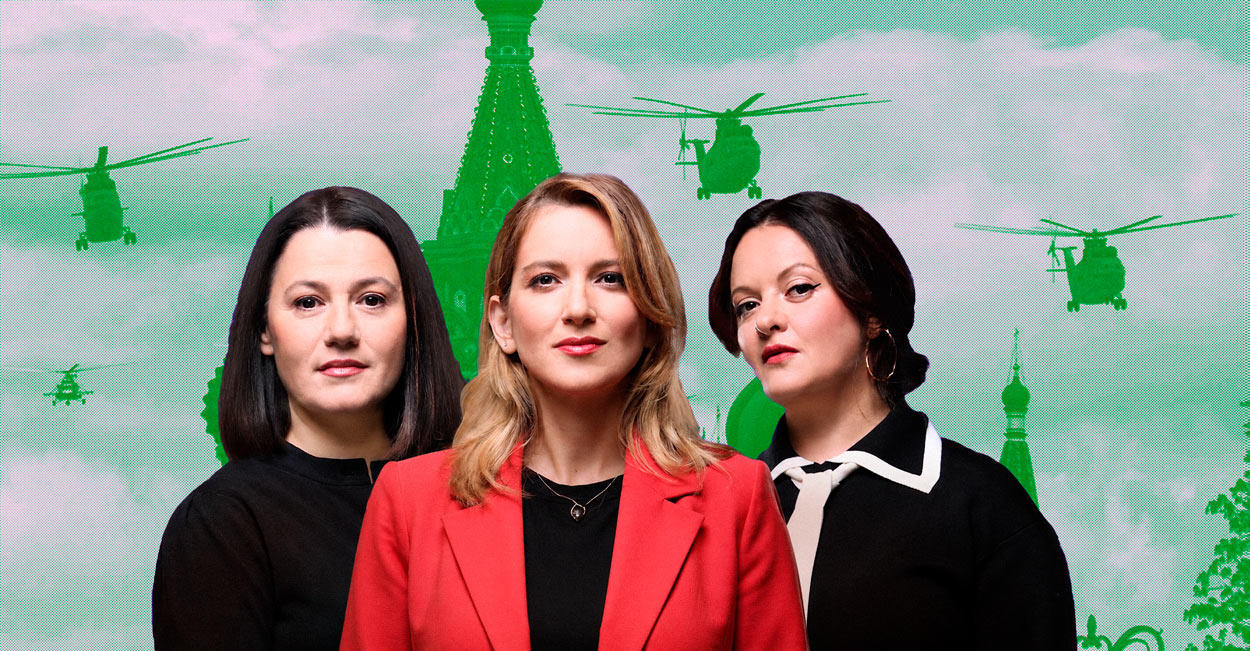
From left to right: Yulia Taratuta, Ekaterina Kotrikadze, Anna Mongait. Photo: tvrain.tv
Evgenia Albats*: The magazine Foreign Affairs published an article stating that the situation on the front in Ukraine is changing, and therefore the possibility of a ceasefire is becoming real. The essence of the article is that due to new technologies, Ukraine, about which Trump said it has «no cards» and is inevitably going to lose this war, is gradually turning the situation around, and as the author writes, it is becoming increasingly obvious that Russia has no chance to end the war as it wants. As our columnist Andrey Kolesnikov* writes in another column in NT, Putin is in a strategic and tactical deadlock. There are no steps that would improve his position. Finally, the philosopher Francis Fukuyama also spoke about this, claiming that the balance between great military powers like the USA and Russia, and smaller countries like Iran and Ukraine, has completely changed. What do you think about this?
Putin's luck has run out
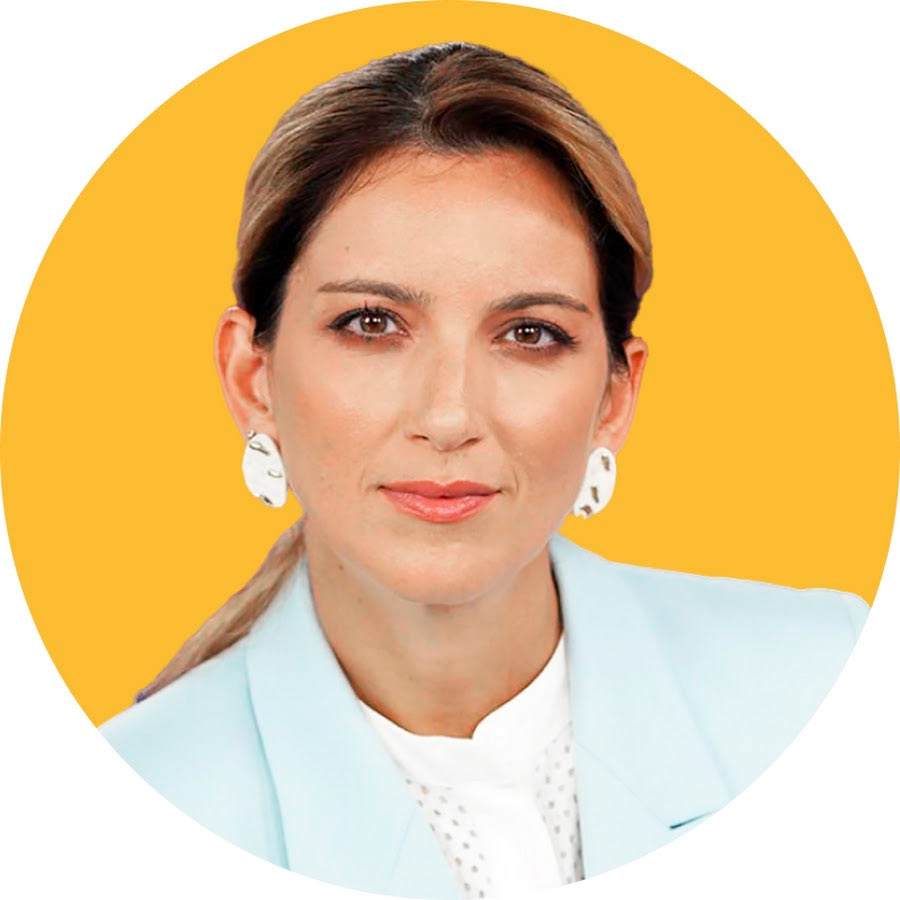 Ekaterina Kotrikadze: I share the predictions of the magazine Foreign Affairs. Indeed, something has changed and something very bright and new seems to have appeared in the air in Russia.
Despite the fact that none of us are currently on the territory of the Russian Federation, each of us has our sources, acquaintances, and the opportunity to read a huge amount of analytics. In general, this is a new reality in which Vladimir Putin and the Russians now find themselves. Sometimes it is even impossible to touch, but there is such a feeling.
The trend of declining popularity of Putin is recognized even by VTsIOM, the state sociological institute. And in my feelings, this is not only a story about Ukraine achieving successes on the front with its drones and kill zones. It's a whole range of other circumstances. In my feelings, Putin's luck has run out. He is no longer as lucky as he used to be. He made a mistake at some point, as it seems to me, by refusing further negotiations mediated by Trump and refusing any concessions from Russia, thinking that everything would be fine for him, as it seemed to him, for the last 4 years.
Now a wave has come that does not give Putin new cards. Those cards that just fell from the sky onto his head. Such as the election of Donald Trump as president of the USA, who did everything to keep Putin in a great mood, up to the red carpet in Anchorage. Now he finds himself in a rather difficult situation, and society's rejection of his decisions, including such as turning off the internet in Russia, brings everything into a big serious problem for a person who did not expect any problems at all.
All of Putin's failures are a projection of military failures because Putin in his new version imagined himself a great commander
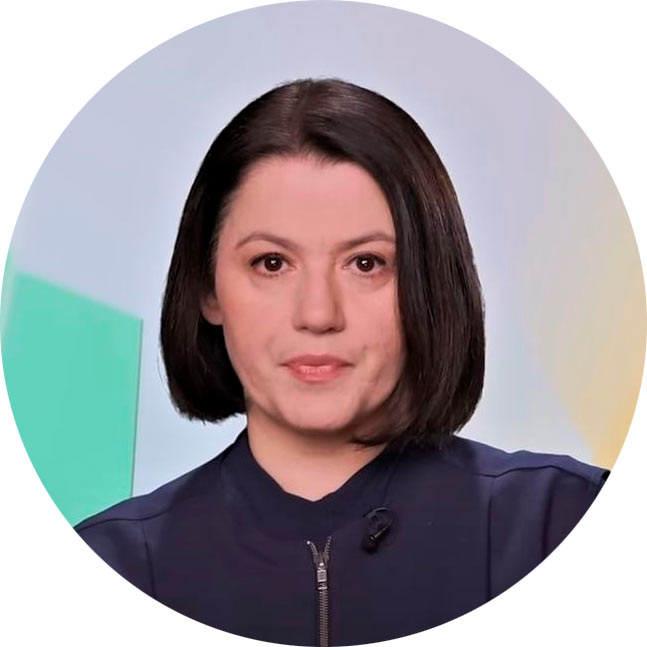 Yulia Taratuta: My sister just left, she came from Ukrainian Vinnytsia, and obviously, I also watch the news about the war with great and, as you understand, personal interest. In our family, there is some division of labor. My husband Misha, Mikhail Fishman*, understands more about the war and follows it in real-time. And I am very happy to learn from him that Putin is no longer winning on the front line, that Ukraine is destroying Russian logistics with drones, and that the front is standing. For me, these are simply incredible, fantastic news. It seems to me that the lack of his luck is mixed with failures in the war, that all his other failures are a projection of those very military failures because Putin in his new version imagined himself a great commander.
Evgenia Albats: In «Moskovsky Komsomolets» last week, an article was published, the essence of which was that maybe it's worth ending the war, never mind that some goals were not achieved, the entire Donbass was not taken. Sometimes in Russian history, there was a phrase right there, there were many circumstances when losing events turned out to be positive for the country. The article was published, it was talked about a lot, but it is no longer on the site. Anya, you just heard quite optimistic words from your colleagues. But today, your beloved Odessa was hit again and they hit a maternity hospital.
It's as if people, in principle, have become untied, as if they have become less afraid because they are so fed up that the authorities do not feel their mood
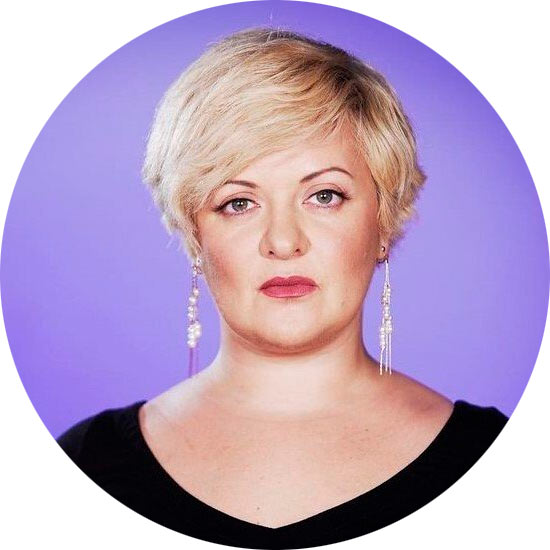 Anna Mongait: I have different feelings. I am a pessimist in our small company. I believe that these obvious much-discussed failures or weaknesses of the Russian army on the front will only lead to escalation. For Putin, any failure is a reason to crush with force. Therefore, it seems to me that the danger of serious escalation is greater than ever, be it an attack on European countries or some reckless forceful actions. I do not believe that in this situation something can lead him to end the war. On the contrary, this is a reason for him to show that the war will not end now, that he is winning by any means, switching attention to other news, making some unexpected move. It seems to me that we should not be deluded, and I hope that Ukraine is not deluded either.
What seems to me a positive vector is that by the already God knows what year of rule and the fifth year of war he, of course, has completely lost touch with the country. That is, there was little of it before, otherwise, the war would not have started, but now the connection with society is lost. Otherwise, he would not have followed the lead of the second FSB service and the internet would not have been restricted.
They are already feeling the consequences, otherwise, there would not have been the statements of recent days, where he says that the people should be allowed the internet, that is, to unscrew the handle that he just tightened. Apparently, they measured the mood. The mood is not in his favor, there are many protest statements on social networks, and not only from people abroad. These are not only statements from blogger Bonya, as well as her appearance, but in principle, it seems as if people have become untied, as if they have become less afraid because they are so fed up that the authorities do not feel their mood, do not allow them to sit quietly.
After all, for some time it was possible for two Russias to coexist: militaristic Russia and bourgeois Russia, and they lived in parallel. And now militaristic beacons, beacons of prohibitions, have come to bourgeois Russia. And therefore it seems to me that we are observing some systemic changes. Communication is obviously lost, but this may not lead to a positive development of events, but on the contrary, to even more tightening.
Ekaterina Kotrikadze: No, it doesn't mean that there will be no bad consequences, that Putin won't strike Riga or Vilnius now. But this is constantly being discussed, it is on the table, and no one doubts that this is one of the possible scenarios. It's about feelings, as if the air has changed. Instinct says that if he does this, it will not necessarily lead to terrible consequences for the progressive Western world and the triumph of the Russian club. On the contrary, this may be the last step he will take. Yes, I completely agree, this is escalation, which is exactly why even more missiles, even more drones are flying to Kyiv, Kharkiv, Odessa. This is how Putin acts. But the thing is that perhaps these actions of his are rather leading him into the abyss.
Putin has no resources
Evgenia Albats: I would like to present one argument in favor of your concept, Katya. There is a military expert in Russia, Vasily Kashin, a fairly well-known person, an absolute statist, a Z-man. He published an article in the magazine «Russia in Global Affairs», the essence of which is that to win the war as the country's leadership wants, the occupation of all of Ukraine is needed. Russia does not have the resources for this. Another option is to simply stop at the line of contact because there is no hope for significant progress in Donbass. This is also a very indicative thing. On the other hand, we know that Siluanov, the Minister of Finance, wrote a letter to the government stating that war funding increased by 26 billion compared to last year, the budget deficit is 2.5% of GDP, and something needs to be cut because there is no money left. That is, Putin really has no resources, he needs at least a break. Especially since some cooling with the Americans is obvious. On the other hand, the US representative to the UN stated that there are systematic massive attacks on civilian targets in Ukraine, and the United States does not advise Russia to do so. At the same time, two more interesting remarks. Secretary of State Marco Rubio said that Ukraine now has the strongest army in Europe. And Peter Hegseth, the Minister of War, said that Ukraine is now the «Silicon Valley of War» in the sense that modern military equipment is being tested there. And the President of Ukraine, Volodymyr Zelensky, in an interview with CBS, said that they have agreements with a number of countries on the supply of drones. But he wrote a letter to President Trump and Congress, asking for air defense funds because they cannot defend against the amount of ballistics coming at them.
Anna Mongait: What's interesting here is that he not only asked for air defense but said: «Let's produce it ourselves». That is, they have already switched to a self-sufficient war economy to the extent that they are ready to produce these «Patriots».
Evgenia Albats: Ukraine now has an extremely advanced military-industrial complex, and primarily this is related to the production of cheap drones, and Zelensky said that Russia is now losing 35 thousand people a month. This is beyond good and evil. And this is also one of the results of this season.
Armenia, Putin threatens, may face the fate of Ukraine if they do not listen and follow instructions from Moscow. Nikol Pashinyan irritates Russian propaganda and Russian officials terribly. Dmitry Medvedev even compared Nikol Pashinyan to Trotsky
We more or less agreed that the situation for Putin is largely a dead end, but how he will get out of it, there are two points of view. One is that maybe he will have to roll back and go for a ceasefire. The second is escalation, even more massive strikes, provocations involving drones, as was the case in Romania, or missile attacks, as was the case with the Turkish ship.
I want you to comment on Lukashenko's statement about Armenia, that Armenians need to be very careful so that, God forbid, they do not repeat what happened in Ukraine.
Ekaterina Kotrikadze: Lukashenko repeats after Putin because Putin has already said exactly these words, that Armenia may face the fate of Ukraine if they do not listen and follow instructions from Moscow. Nikol Pashinyan irritates Russian propaganda and Russian officials terribly.
Today Dmitry Medvedev also made a great statement, comparing Nikol Pashinyan to Trotsky. About Trotsky's half-hearted position, the bad Brest-Litovsk peace, etc. And Pashinyan is going there too. But all this is not important. What is important is that Medvedev then says: well, we all remember what fate befell Lev Trotsky, hinting that Pashinyan will be killed with an ice pick, apparently. I have some acquaintances who are very close to Pashinyan, and they say that these threats were perceived exactly as a direct threat of murder.
But in Yerevan, they decided that they would behave very carefully until the elections on June 7 and would not take any drastic actions so as not to irritate this already unpleasant wave, and in the hope that after the vote all this will subside and end as soon as Pashinyan is re-elected. According to the ratings, he is doing well so far, his party is in first place, and there is a high probability that he will be re-elected as prime minister.
They are counting in Armenia on the fact that all this will end as soon as Putin simply learns that nothing worked out, that they lost. As they lost in Hungary.
Anna Mongait: Lukashenko has his own bad relations with Pashinyan. They exchanged very sharp remarks. He does not just pick up Putin's words or the rhetoric of the Russian authorities. This is his personal revenge, I think he enjoys what is happening now between Russia and Armenia. He would like Armenia to have problems with Russia because he has nothing to present to Armenia, he cannot directly engage in conflict with it, but he will be happy if Putin does.
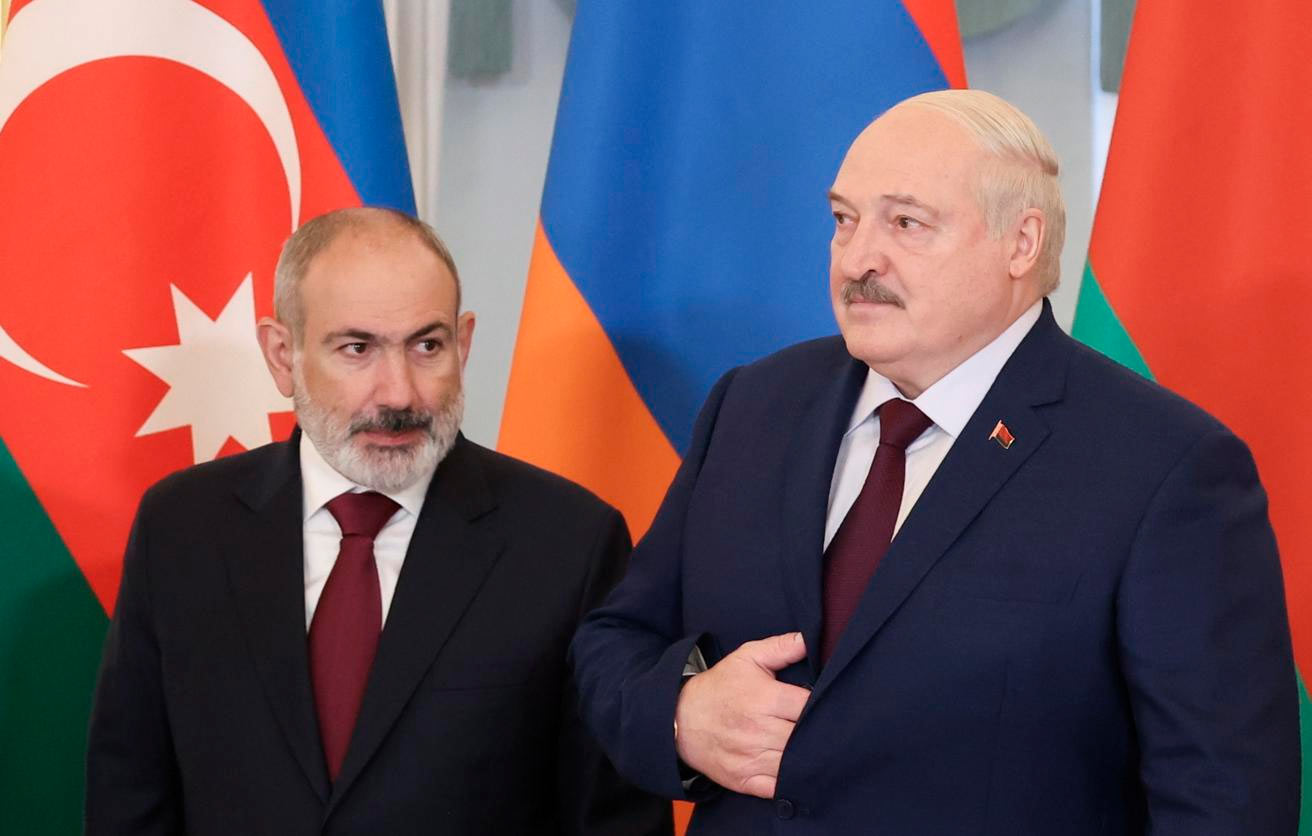
Prime Minister of Armenia Nikol Pashinyan and President of Belarus Alexander Lukashenko. Photo: V. Sharifulin / TASS
Evgenia Albats: Let's say that Pashinyan in these elections is talking about Armenia beginning to reorient towards the European Union, and he has been saying this not for the first time. And secondly, Marco Rubio is flying to Armenia as if to support Pashinyan in his confrontation with Putin. And the Russian authorities have already stated that Armenia will lose 14% of GDP from breaking economic relations with Russia. They will have a rather difficult situation with energy if Russia cuts off all capacities. But today I read the newspaper «Kommersant» — it reports that Vladimir Putin congratulated Nikol Pashinyan on his birthday. Yulia, what are the nuances here?
Yulia Taratuta: I think that as in the case of not pronouncing the name and patronymic <of the President of Kazakhstan> Tokayev, Putin is two-faced. On the one hand, he demonstrates the dark side of his soul through Medvedev, that is, he behaves aggressively. And with the other hand, through the newspaper «Kommersant», he congratulates on his birthday. Well, like, out of politeness. This is my semi-political, semi-artistic explanation. Everyone understands that a bad peace is better than a good quarrel, and apparently, the tomahawk of war has not yet been fully unsheathed. As a person reasoning about what is happening with Putin, I always enjoy watching any leader of the post-Soviet space who shows a goat to Putin. I got incredible pleasure from the meeting of Putin and Aliyev, from how Putin is forced to apologize to Aliyev, how he goes against himself, but makes peace with a large post-Soviet country, which is important to him, including because of Turkey. Similarly, I was pleased to watch how Pashinyan tells Putin that Armenia has a democratic path, implying that you, Vladimir Vladimirovich Putin, have had everything so bad with democracy for a long time that you even forgot this combination of letters. I am pleased that a post-Soviet country has a leader who can be elected, that this is a person who records funny videos, who listens to music, who invites nice artists-agents. I am very happy that someone knows how to build a path separately from Russia, and someone knows how to build a path completely anti-Putin both in image and in essence.
Evgenia Albats: Don't you think that this is also one of the results of the political season — that Putin's Russia is losing influence in the post-Soviet space? There was practically a break and relations between Russia and Azerbaijan entered a tough phase. Pashinyan openly says that they want to join the European Union. Kazakhstan, despite the fact that Tokayev was licking Putin during his second state visit to Kazakhstan, nevertheless, the largest trade relations are now with the European Union. We observe that Russia's influence has weakened not only in the post-Soviet space. Everything failed in Africa, in Latin America. In Cuba, the Castro clan is living out its last days. Putin, in an amazing way, by the end of this political season, as it seems to me, demonstrated that Russia has lost any influence, despite being a nuclear power, a huge country, with a population of over 140 million. What do you say?
Anna Mongait: It is very important to emphasize here that we rejoice at the failures of the Russian state in its current form. Specifically, the Putin state. We remember what it started with, with what rhetoric, and how not only did they fail to get up from their knees, but they also failed to put those around them on their knees, and in what truly moral position, in what total failure this «greatness» is now.
After all, these were all indices of greatness: the more countries are subordinate, the more vassals the current Russian state has, the greater its greatness. And now it is difficult to gather oneself together, instilling fear has become very difficult. Four years of war, it would seem, everyone should be afraid. But it seems to me that they have become significantly less afraid. Do you remember when the war started, how the world was in fear, how everyone communicated carefully with Putin, how they were afraid that he might start a nuclear war, how Biden worried about it. And how the rhetoric and self-perception have changed now.
Of course, neighboring states, the Baltic countries are very afraid of the start of the war and have indeed been living in great anxiety lately. But the fear that gripped the world in the twenty-second and twenty-third years has completely dissipated. Hence, it seems to me, the change in vector in neighboring states. Pashinyan, who leads a small state with great material dependencies on neighbors, especially such giant neighbors as Russia, has enough personal courage and vision of the future to distance himself from Russia and not be afraid to quite provocatively say it out loud. The same thing happened with Aliyev and with other neighbors who are gradually beginning to gain courage.
It seems to me that this is a very, very important feature of this political year. If we sum up the results, it concerns both private individuals, Russians, and big politicians who were in great dependence. This is probably the good thing that can be taken from this political season.
Without language
Ekaterina Kotrikadze: Here we need to add more, it seems to me, about the fact that everyone seems to have forgotten a little about Moldova, and there were also elections there this year. They were also absolutely fateful, historical elections for Moldovans. Russia invested a lot of effort to ensure that a pro-Russian party won there. Moreover, there is good ground for this, there is a terrible nostalgic aura in certain circles. And these are quite wide circles. But in the end, democratic, pro-Western forces won.
Then there was Hungary, where a bet was placed on Orban as if he were not just a comrade of Vladimir Putin, but some third in their party with Alexander Lukashenko. Putin lost in Hungary, and with a much bigger bang than the Americans, who also supported Orban.
And now in Armenia, for Russian propaganda and Russian officials, it is just some kind of holy war because this is the last of the possible outposts in the post-Soviet space that Russia wants to protect in the near future. This is still our Armenia, our underbelly, our sphere of interests, it is constantly emphasized. Pay attention to how they talk, what messages Russian politicians and propaganda send: the Armenian people are our brotherly people, we will do everything for the Armenian people. The Armenian people are horrified by such attempts to take care of them. Because we all know what happens when Putin's Russia takes care of any people.
Anna Mongait: And this is also a story about the loss of rhetoric skills with the outside world, about complete detachment. They do not know what Armenians really want. They really think that if they take away all their exports, they can win this way. They do not change, they do not find a new language. The world is changing, but they are not. And the same thing, it seems to me, is happening at other geopolitical outposts. They think they can buy everyone.
Yulia Taratuta: I recently had a column about how propaganda, one of its pillars, namely Margarita Simonyan, reacted with her life and her life events to various geopolitical failures of the Kremlin. I must say, I still consider the version presented in this column to be conspiratorial, but it is so exotic that let me tell it. It even concerns the choice of the day of death <of Margarita's husband, who was in a hopeless coma> Tigran Keosayan. According to one version, Margarita Simonyan made the choice based on geopolitical events, since on that day the results of the elections in Moldova were announced, and Margarita was very involved in the information campaign. The same story happened with Hungary: when the news of Orban's defeat appeared in the information field, Simonyan went on the show with Lera Kudryavtseva and also gave a lengthy interview where she talked about a new package of her misfortunes.
Ekaterina Kotrikadze: What's the point? Why? To shift public attention?
Yulia Taratuta: Because the failure in Hungary is such a serious Kremlin screw-up, including the defeat of the information campaign, it's such a serious story that Simonyan was so involved in that it was necessary, first of all, to switch attention, and secondly, to distract attention from her own failure, from her own defeat by telling about her own grief.
Shooting defects
Evgenia Albats: Since you, Yulia, brought up a conspiratorial version, I want to ask you about the son of Patrushev, who is the Deputy Prime Minister and is responsible for agriculture. At the beginning of the conversation, he somehow strangely addressed Vladimir Vladimirovich, something like «PalPalych» or «PalLaich», so everyone noticed and started discussing it. What was that?
Yulia Taratuta: I have already conducted, it seems to me, an investigation on this topic, questioned everyone I could. So far, the most popular, but also the most logical version is that we heard something wrong. Well, in the sense that there was some kind of sound defect. All other versions, of course, are funny. That this is, they say, Putin's childhood nickname, which is allowed to be used only in the circle of close ones, or that this is some kind of his FSB nickname, and several similar versions. It seems to me it's beautiful that Patrushev's son is part of such a close circle that he is allowed to call Putin by some internal nicknames. But in fact, if without jokes, nothing like this is allowed to him and never will be.
Patrushev Jr. rose in the ranking of Putin's officials after his father was greatly demoted because when Shoigu was fired, he needed to be placed somewhere and not humiliatingly. For this, the whole senior Patrushev was removed, although no one was going to remove him
There is a wonderful story that Patrushev Jr. is called one of the candidates for succession. Although we know that there will never be any successors, but among the named successors he is always mentioned. And we remember that this Patrushev rose in the ranking of Putin's officials after his father was greatly demoted because when Shoigu was fired, he needed to be placed somewhere and not humiliatingly. For this, the whole Patrushev was removed, although no one was going to remove him. The talk that Patrushev was working poorly is not an argument. In Putin's Russia, they never fire for poor work. And according to one version, as compensation to senior Patrushev, his son was promoted, so that the family would be well. But I repeat, this is a version on a version. Unfortunately, access to the Kremlin corridors is somewhat difficult for us from Amsterdam, so I am content with retellings.
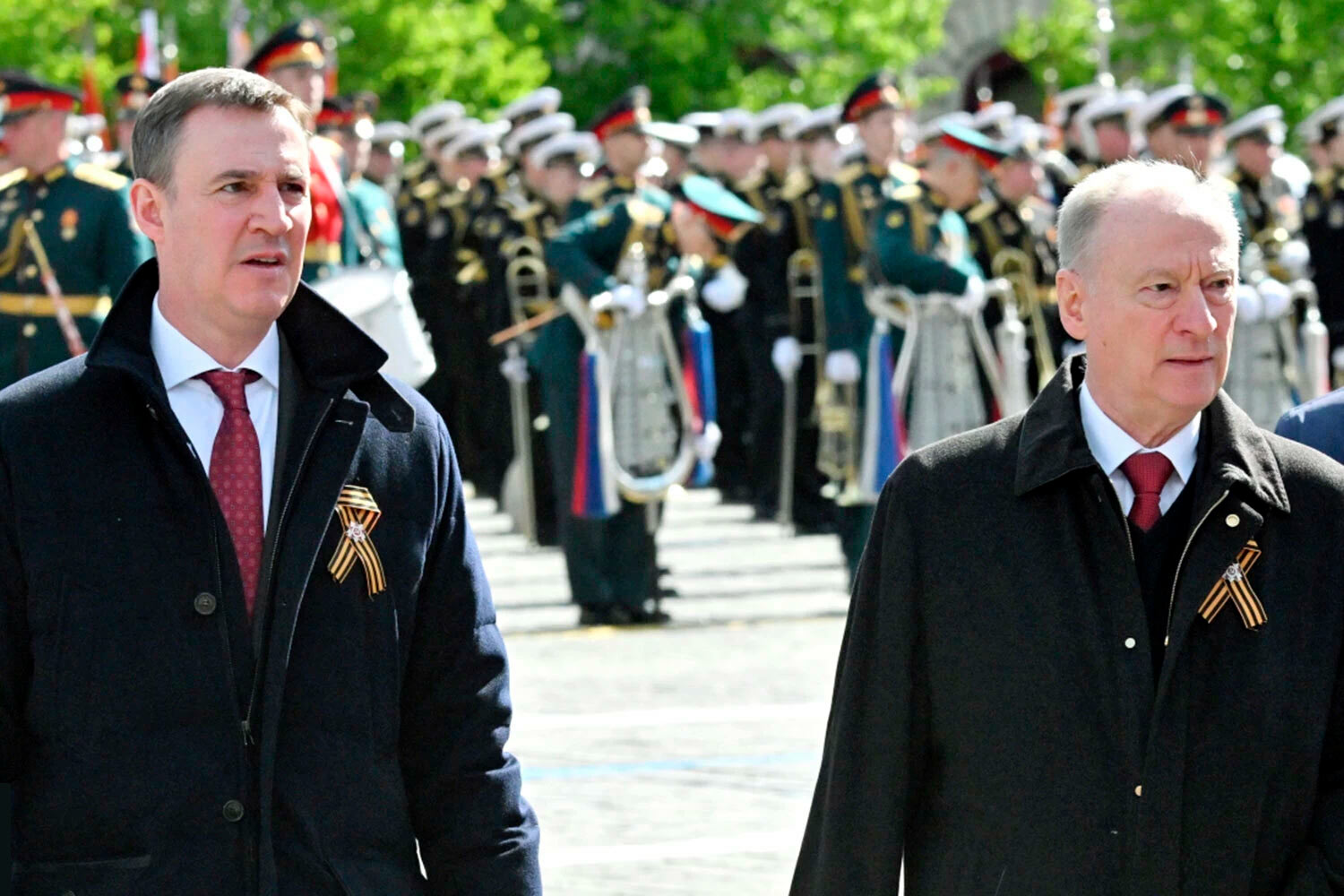
Nikolai Patrushev (right) and his son Dmitry Patrushev (left). Photo: I. Pitalyev / RIA Novosti
Anna Mongait: Do you remember how Peskov explained why Putin spoke in an old and simultaneously childish voice when he went somewhere to the headquarters in military uniform. On the one hand, he was filmed unsuccessfully, where he was such a small old mushroom, and on the other hand, he still spoke in the voice of a dwarf. Peskov had to come out separately, lie down on the embrasure, wiggle his mustache, and say that in fact, these are shooting defects, and he is actually a two-meter bass guy.
Grandson on the start
Evgenia Albats: Now the «United Russia» primaries have passed. We understand that elections in what they call parliament are not elections, and the Duma is not a parliament, it's a complete fiction. Nevertheless, they play this game and held primaries. And it turned out that Sergey Neverov, who was the leader of «United Russia», was not allowed to participate in these primaries. Well, such an absolutely attached to Volodin. But the second interesting person is Vyacheslav Nikonov, the grandson of comrade Molotov, Stalin's People's Commissar for Foreign Affairs. Nikonov was recently in Washington. Everyone was very surprised why he was given a visa. Nevertheless, he was there. And there were rumors that Nikonov might replace Lavrov, since Lavrov has completely lost his bearings. And supposedly there is an idea around Putin that it is necessary to return to some more or less diplomatic lexicon, although I do not really understand how this is possible under Putin. And that Nikonov will go to Lavrov's place. What do you think about this?
Yulia Taratuta: I don't like this version. Maybe since I thought about whether Lavrov could leave, the dog managed to grow up, and Nikonov grew to such a version. But it feels like he is not a figure of such an order that he can become the Minister of Foreign Affairs under a warring Putin.
Evgenia Albats: They are about symbols, Yulia. Pay attention, all the years of the war they constantly appeal to different symbols. This is a reminder of the Molotov-Ribbentrop Pact, this is a reminder of the division of Europe. This is a reminder of the division of Poland, the occupation of the Baltics, etc. It seems to me this is one of such symbols.
Yulia Taratuta: I think this is too complex an intellectual technique for the Kremlin. Symbolically they crush «Memorial»**. They just believe that enemies of the people are enemies of the people. This is the level of their encroachment. But to come up with such a beautiful, creative picture with Molotov — no. And the second reason why the idea itself seems unrealizable to me. For about the same reason why it is not necessary to discuss a successor. Putin does not change people just like that, without need he does not do it. His dissatisfaction with Lavrov is a long-standing dissatisfaction. As knowledgeable people say, he never liked that Lavrov was more radical than Putin himself, that he is such a bit of a shirt-guy and even in private kitchen conversations speaks about the war more sharply than others. Or that he comes to some parties in some special patriotic T-shirts, even among them it is not accepted. And supposedly Putin in his circle always complained a little into his fist that Lavrov is too sharp, that he is undiplomatic. In the sense that you need to be a little softer. But it seems to me that nothing forces Putin to change Lavrov. For Putin to remove a person is to create in people the feeling that in his life and in his regime there is no desired stability.
Ekaterina Kotrikadze: A well-known thing with Lavrov, absolutely confirmed from several sources, is that Lavrov has long wanted to leave himself. He has this need to rest because Lavrov is generally a deeply tired person, he even shared with some people who then pass it on to the Western press. Several articles have been written about him, where sources confirm that Lavrov would like to retire because he is tired, to call things by their names. This does not contradict what Yulia said: he is very sharp because he is very angry, embittered because he lost his career, he is now a laughingstock in diplomatic circles. And he was still a magnificent Lavrov, respected by enemies, 10 years ago. In general, this Lavrov's anger, this fatigue led to the desire to retire, but he is not let go. And I do not believe in the Nikonov version. Putin, with all his paranoia, understands the breadth of contacts, skills, etc. That is, even to imagine that Nikonov can establish relations and play subtle diplomatic games with the few friends that Russia has left on the external front is quite difficult because Nikonov is somewhat like three rubles, just listen to his broadcast on Channel One. This is such a crude propaganda, there is no creativity or wit in it. Lavrov used to have it. Now it doesn't, but it was. Putin is annoyed with Lavrov, yes, but I would rather imagine that Kirill Dmitriev becomes the Minister of Foreign Affairs than some Nikonov.
They are proud that Russia can do this: the whole world is on its knees, and Russia humiliates them. What kind of diplomacy is there? What to whom to talk to intelligently?
Anna Mongait: I would not bury old Nikonov. He has been many things in his life. He is much more his own than Lavrov. He sat here and there. He is ingrained in this system. I am more confused by the story that they are going to establish some diplomatic relations. Nothing hints at this from today. Let's first fire Maria Zakharova, who is, along with Medvedev, the voice of this power: this boorish manner, this name-calling, humiliation, on the contrary, have gained form. On the contrary, they are proud that Russia can do this: the whole world is on its knees, and Russia humiliates them. What kind of diplomacy is there? What to whom to talk to intelligently? They are moving in a completely different direction.
Cultural front
Evgenia Albats: Another thing that happened and can be talked about as the results of the political season, or, if you like, the cultural season, is that the film «Mr. Nobody vs. Putin» won an Oscar, the Grand Prix of the Cannes Film Festival was awarded to director Andrey Zvyagintsev for the film «Minotaur». And at the same time, opponents of the Russian authorities managed to disrupt Russian participation in the Venice Biennale. Do you consider these really serious results? We see that Kirill Serebrennikov had very powerful performances in Berlin and Paris, and at the same time, we constantly hear that Russian culture is being canceled.
Anna Mongait: In fact, this is unexpected. We ourselves did not even imagine that culture in exile could grow so cool that it would be a serious competitor to culture in Russia, that its existence against the backdrop of freedom would be so global. At some point, it seemed that we could become victims of emigrant pettiness. But we didn't. And the example is Zvyagintsev's film, which he made in Russian. And the unpredictable appearance of Talankin at the «Oscar», when the collaboration of the director and the author of the shooting created a product that turned out to be interesting to the whole world. And the number of publishers that publish literature that cannot be published in Russia! Modern culture in its free form all turned out to be outside. And instead of becoming petty and inconspicuous, it became significant, we see it today. This year gave hope that not everything will inevitably die because «everything dies outside the soil», but that everything can manifest itself in some new way.
Ekaterina Kotrikadze: I want to add that the scandal associated with the Venice Biennale and the attempt to cancel the Russian pavilion there, and the success of real Russian culture are absolutely different things. The state brought to Venice numbers of artists and works specially selected by Mikhail Shvydkoy. The coordinator of this Russian pavilion is the daughter of the deputy director of «Rostec», her partner is the daughter of Sergey Lavrov. All under the auspices of the state, with state money and state pomp. Of course, people immediately come there who protest, and they have every right to do so. They say: «Wait, you are bombing Kyiv with one hand, and organizing a Russian pavilion at the Venice Biennale with the other, this is not cool». I understand the protesters. Another thing is that some activists got carried away and from excessive emotions slightly «banned» Sokurov. But do not confuse Shvydkoy with Zvyagintsev. Zvyagintsev is just the triumph of real Russian culture. And proof that talent, regardless of circumstances, will win because there is common sense. So far, it still prevails in some countries of this world. Thanks to France and other states that are still able to appreciate real culture. This is a very cool result of the season.
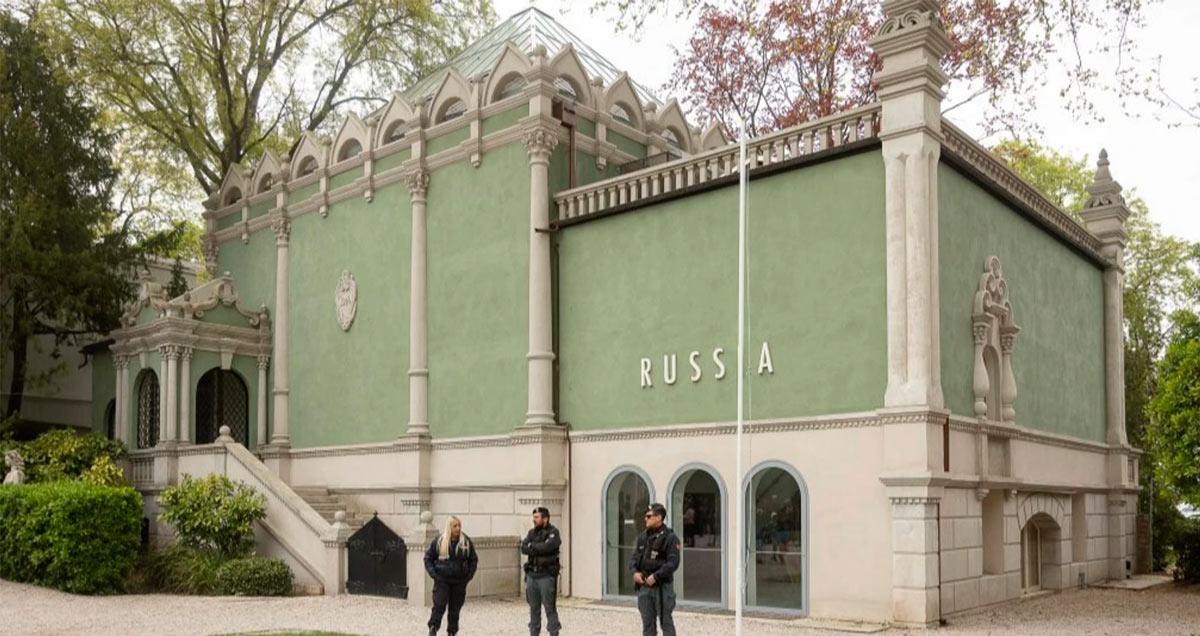
Russian pavilion at the Venice Biennale. Photo: Belga Mag / AFP / Getty Images
Yulia Taratuta: I also think that these are two different stories, but they are similar and fill the overall context. As for the story with Sokurov, it seems to me that he, in a sense, became a victim of the «non-cancellation» of Russian culture, that part of it that should have been canceled in the form of the Russian pavilion. Sokurov was wanted to close the gap, he was invited to Venice as not too radical, in their opinion, a compromise artist. And he, finding himself in this role, then somehow interacted with this role.
Anna Mongait: He is not a participant in the biennale, he was invited to a round table.
Yulia Taratuta: I mean that there was a scandal with the Russian pavilion, and there was an attempt to correct this conflict situation by holding a round table, where they invited, from the point of view of the organizers, a slightly more compromise, less radical figure. Although he is quite radical and not as compromise as the organizers thought. And he was forced to find himself in this role and somehow shoot in different directions.
There is such an unpleasant idea that culture in exile is always provincial, it is emigrant, it is always of low quality. There is always an element of propaganda in this, right? Because when people leave, leave their country, it seems that they will not be able without it. And it is necessary to prove to those who remained that those who left are simply nobody. And real art arises only in opposition to the regime, it was customary to think so since Soviet times.
And it seems to me that it is very cool when someone from those who left (and a fairly significant part of the cultural context left Russia) is given awards and that they produce something so serious that the conversation about the second-rate nature of emigrant culture stops.
Because it is not so. Because in departure people can be truly free to do something truly great. And those who remained in Russia, having sworn allegiance to the regime, once great artists become very small and can no longer produce anything significant.
It's a pity that Sokurov was not advised that these people smell so bad that it would be good to stay away from them
Evgenia Albats: The security officers do not invent anything new, they use old patterns. And I'm just sorry that Sokurov allowed himself to be manipulated. It's a pity that he was not advised that these people smell so bad that it would be good to stay away from them. But note, Zvyagintsev's film is built on Russian material. He used the plot of an old French film, but it is transferred to Russian soil, to the soil of family division in relation to the war. «Mr. Nobody vs. Putin» — this is also Russian material. The performances that Krymov and Molochnikov stage here are Russian classics, only they are staged on modern motifs. Dovlatov is all about how it was in the Soviet Union. Brodsky is the only one who seems to have escaped the trap of Russian life.
Yulia Taratuta: In fact, there are such cultural sectors where assimilation occurs to a greater extent. Pop culture, maybe, but not only. For example, Kirill Serebrennikov is very assimilated. But he left earlier.
Anna Mongait: This is a very important difference. This is due to the fact that his international career took place before the war. He does not fit into this community of people who left because of the war, and they had to suddenly reinvent themselves.
Yulia Taratuta: He also left suddenly, and not from a good life. Just earlier than others. I want to talk about a more, probably, pop-cultural sphere. We had Mikhail Shats as a guest, and he talked about his colleagues, who and how is integrating. There is such a very famous comedian Alexander Dolgopolov. He is quite niche and quite an intellectual comedian, that's his genre. And now he is absolutely integrated. He is already giving concerts in English. Exactly the same story with Irina Prikhodko. She is already performing in German.
Evgenia Albats: You know, a lot of our artists have been coming to New York lately, especially from the music scene. Makarevich and Laima Vaikule came. Makarevich, of course, is an endlessly talented person. His last performance here in New York went very well, there were full halls. And yet this is a departing Russian-speaking environment, because the children of immigrants already speak English. But I am very grateful to you for speaking with such enthusiasm about the successes of Russian culture, because I hope that all these very talented people will be able to hold out until the time when, as I hope, another window of opportunity will open, and at least I will be able to return to Russia, and they will be able to come and give concerts there.
Respite or window of opportunity?
Evgenia Albats: Tell me, what did I miss from the important events of the political season? What else should have been paid attention to?
Yulia Taratuta: We <in our broadcasts> devoted a lot of time to what Anya cited as examples of changing the air in Russia, namely what is called an intra-elite rebellion — the discontent of people who are closer to Putin, loyal and dependent on Putin. We devoted a lot of time to Victoria Bonya's speech, and Ilya Remeslo's speech, and the rebellion of people against the destruction of the internet in Russia.
All these seemingly sudden speeches and sudden fronts become the subject of our attention. And it seems that these are still things that are political markers of the time. And not only military results and not only problems with the economy. When there is less money, everything starts to explode. Unfortunately, in this place, unlike the prospects of war, I am not at all full of optimism. Putin knows how to tighten the screws like no one else. And since a lot of power is with the FSB, it seems to me that even a temporary respite is just a temporary respite, and when necessary, the claws will be released and some demonstrative arrests will resume. But at the same time, many people mobilized by him earlier from the elite began to publicly doubt him.
Anna Mongait: I would say that the main thing for the country, for the internal country — is the restriction of the internet. Nothing has hit patriotism so much in recent years, it seems to me, since the mobilization, as the restriction of the internet.
I communicate with various old acquaintances, sources who have retained ties in Russia. And never before, as they tell, has there been such fermentation inside.
Perhaps because people felt some weakness in the position, or that support ceased to be so monolithic, or that infantilism, which at some point overwhelmed Russia, some kind of haze, when people were giving away their loved ones to war for money by the thousands and did not oppose anything, — it seems to be dissipating.
Fermentation is obvious. And the story with the internet — this is, of course, to some extent a self-inflicted wound. And I still can't understand how they could allow this in such a form, fall into such blindness, to accelerate all processes so much.
Ekaterina Kotrikadze: I have an acquaintance in Moscow, I asked him: «What do you think is the main thing now?» What is the main feeling, the main request now in Moscow and in political circles, and in circles close to the elite? And he answered me: «There is a request for understanding tomorrow, for removing the feeling of absolute unpredictability». That is, the feeling of unpredictability prevails. The feeling of nervousness due to the fact that people cannot predict their tomorrow. And someone probably looks at this as a serious problem for themselves, for their loved ones, for their work, career.
But I still prefer at this stage of my life to look at this as a window of opportunity. And let's give ourselves the opportunity to believe in this window. Just in recent years, so much terrible and horrible has happened that we all seem to have become cynics and pessimists. And I would like to allow hope for the best.
Anna Mongait: Another important thing for this year is that there was a moment when active (or so it was forced that active) peace negotiations were underway. And they say that in Russia there was a feeling of hope and a feeling of a changing future, people began to make some long-term plans, including in business. And when it became clear that all this was an illusion and there was nothing, then the pessimism you are talking about intensified even more due to the understanding that it was a game, and in fact, there is no future.
Yulia Taratuta: I agree with the thesis that everything has become very unpredictable, but this can be viewed optimistically and pessimistically. I also constantly hear that the system has become shaky. Yes, the reactions to various events of the system are not as fast and even not as harsh as they could be, due to shakiness, because the grip is weakening. And in this case, the worse, the better. If the screws become completely loose, perhaps our hope is not accidental.
Evgenia Albats: This is a very good point about the window of opportunity. I will only briefly add, we did not mention the big interview that <Putin's ideologist> fascist Alexander Dugin gave to Ksenia Sobchak. The level of obscurantism and «poverty of philosophy», quoting the classics, is amazing. If these are the best brains that Putin has, then, in general, the guys are already at the end, they have no resources. Not only economic and military, but they have no intellectual resources. They have become absolute empties. And this, too, seems to me, is a very important result of the political season.
Video version
* Evgenia Albats, Andrey Kolesnikov, Ekaterina Kotrikadze, Anna Mongait, Yulia Taratuta, Mikhail Fishman, Mikhail Shats, Andrey Makarevich, TV channel «Dozhd» in the Russian Federation are declared «foreign agents». «Dozhd» is also declared an «undesirable organization».
** The Supreme Court of the Russian Federation recognized the movement «Memorial» as an «extremist organization».