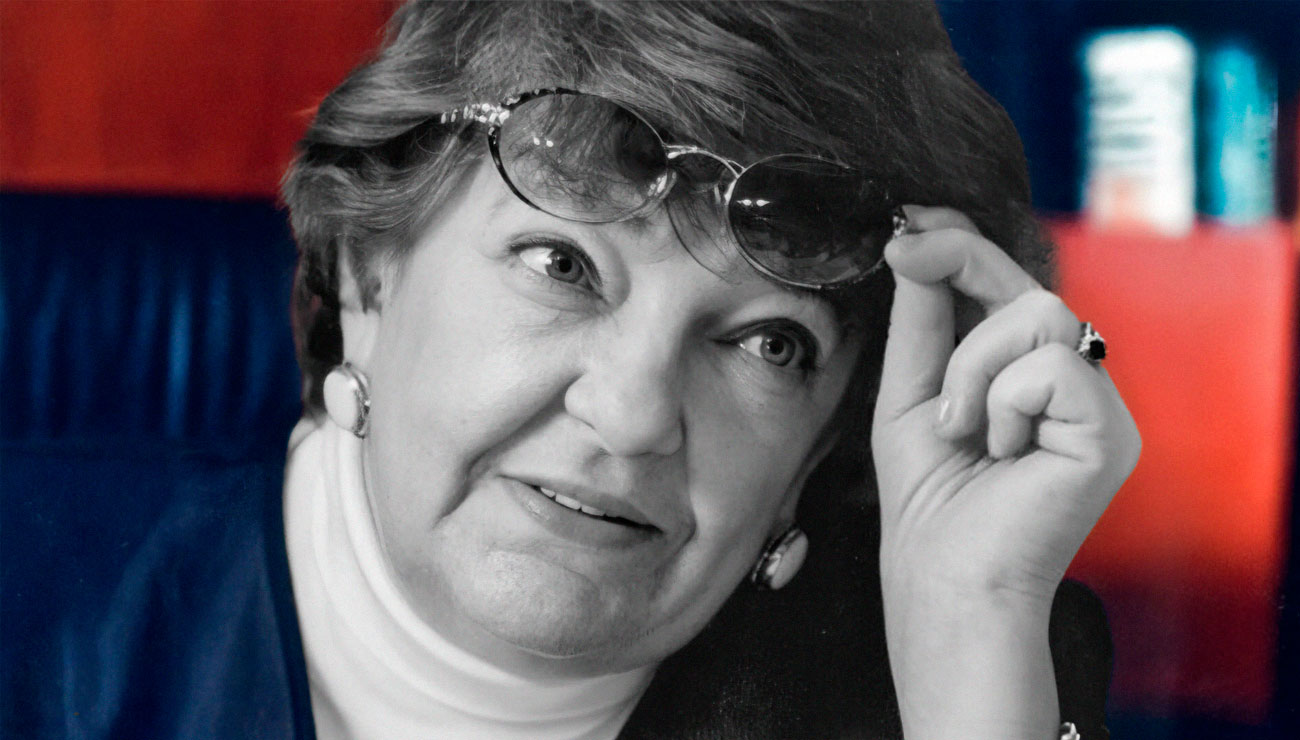
Irena Lesnevskaya
Irena Lesnevskaya saved the magazine “Novoye Vremya.” This is the accepted belief, and it was indeed so if one understands salvation as a new life.
And it happened like this. On October 7, 2006, Anna Politkovskaya was murdered. The democratic and human rights community was in shock. At Anna's funeral, the editor-in-chief of “Novoye Vremya” Alexander Pumpiansky, who was unsuccessfully searching for a sponsor for the magazine that had lost its economic base due to the rough seizure of the editorial building, met with Irena Lesnevskaya, the creator and recent owner of the successful REN-TV channel. They were acquainted, but it was then, at Anna's coffin, that Irena learned in detail about the dramatic story of “Novoye Vremya” dying. Everyone who knew Irena personally understands what an emotional blow the combination of these two events was for her: the tragedy of the death of a famous journalist and the impending closure of the magazine she read and loved. For her, in many ways a person of the Russian Renaissance, this coincidence was marked as another cruel blow to press freedom. And right there, at Anna's wake, she said she would not let the magazine die. Maybe later she regretted her noble impulse, as she was a person of action and knew how to count money, but it was not in her nature to retreat.
She bought — but not the magazine, rather the brand, a popular name with an interesting history and the fame of a democratic, liberal publication in the '90s. By that time, of the many multilingual versions of “Novoye Vremya,” only the Russian and English versions remained. That's where the name of the new publication came from — The New Times. It was a rebranding, but a very serious one: the editorial staff changed, essentially creating a new project. The main thing remained: democratic content, an active political stance. Irena Lesnevskaya's reputation was a guarantee that the new magazine would still be a publication with a direction, as they used to say. And her extensive creative and administrative connections helped quickly promote NT and make it popular not only among the intelligentsia but also in business circles and the political elite. It was her project, her brainchild, she loved it completely in a feminine way, was jealous, protected, nurtured, and was proud of it.
This is the backstory. The story of The New Times is not yet finished. Over the years, a series of incredibly talented journalists have passed through it. Irena Stefanovna loved everything talented, daring, original — like herself. She said about herself that she was a hooligan, an inventor as a child. Something similar was said about herself by another great woman, Valeria Ilyinichna Novodvorskaya (a columnist for NT from the first issue until her death on July 12, 2014). They adored each other for a reason. I have a theory that Lesnevskaya did not let “Novoye Vremya” perish largely because Novodvorskaya was regularly published there with her “Free Flight.” And Valeria Ilyinichna was the first person Irena invited to the staff of The New Times. Both passionate, partial, categorical in love and dislike, they valued each other's commitment to freedom in all its manifestations.
Now all this seems like fantasy. But it was. Noble impulses, faith in a free press, confidence that the personal efforts of each can achieve the common good. And it was precisely by people like Irena Lesnevskaya that the history of free Russia was made.
Photo: The New Times.